5 Cyber Safety Facts That'll Shock You

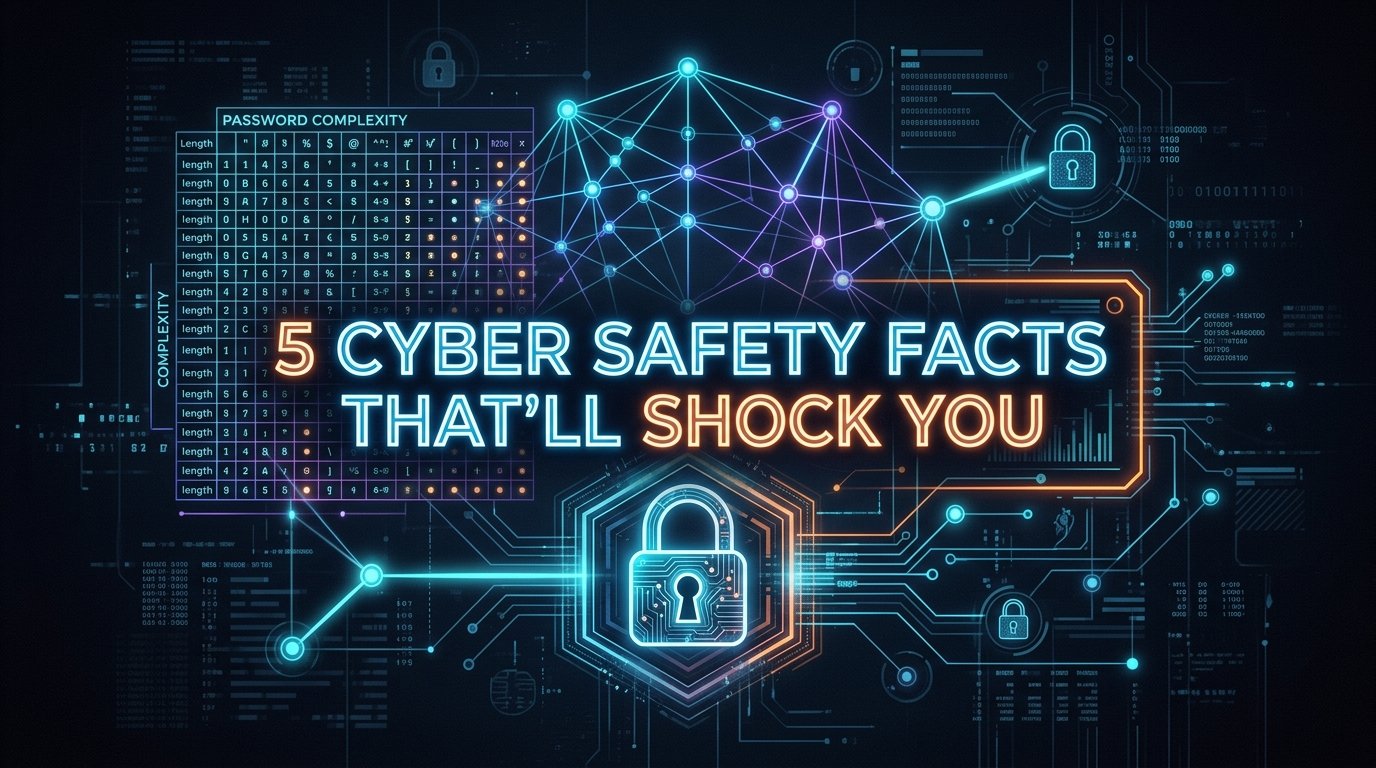
Table of Contents
Most people think cyber safety is about complicated software and technical jargon. In reality, some of the most important cyber safety facts are surprisingly simple — and a little unsettling once you actually hear them. Here are five that might change how you think about your inbox, your passwords, and even your photos.
1. The First Computer Virus Was Basically a Prank
Long before "cybersecurity" was a word anyone used, a programmer named Bob Thomas built an experimental program called Creeper in 1971, designed to run on ARPANET — the early network that eventually became the internet. Creeper didn't steal anything or damage a single file. It simply copied itself from one computer to another and displayed a short, playful message.
Cyber threats have obviously come a long way since then, growing from a harmless experiment into a global problem worth trillions of dollars a year. But the core idea behind Creeper — reaching a computer remotely, without ever touching it — is still the foundation of nearly every cyberattack happening today, more than fifty years later. The tools changed. The basic trick didn't.
2. AI Can Crack Passwords Over a Billion Percent Faster
Every year, the cybersecurity firm Hive Systems tests how quickly modern hardware can guess passwords, and their most recent research included a number that's genuinely hard to process: password-cracking speed on AI-specialized computing hardware has increased by more than 1.8 billion percent compared to a typical home computer.
That's not a typo. Billion, with a B. The reason is simple once you think about it — the same chips built to train massive AI models happen to be extremely good at the repetitive math involved in guessing passwords millions of times per second. It means a password that felt "safe enough" a few years ago may not be safe today, not because the password changed, but because the hardware available to attackers did.
3. An 8-Character Password Might Only Buy You Three Weeks
According to that same research, a simple eight-character password made only of lowercase letters can now be cracked in roughly three weeks using consumer-grade hardware. Stretch that same password to 13 characters using a mix of uppercase letters, numbers, and symbols, and the estimated cracking time jumps to an estimated 56 billion years.
The lesson isn't "add more symbols." It's length. A long, unique passphrase — something like a random string of unrelated words — is often both easier to remember and dramatically harder to crack than a short password stuffed with special characters.
Pro Tip: If remembering complex passwords feels impossible, use a password manager to generate and store long, unique ones for every account. Length beats complexity when it comes to buying yourself time against modern cracking tools. Check out our device security tips for more advice.
4. Millions of People Are Using Passwords Hackers Already Have
Research from Cloudflare found that around 41% of people log into their email, social media, or other online accounts using a password that has already shown up in a previous data breach. In plain terms, for roughly two out of every five people, the password protecting their account isn't actually secret anymore — it's already sitting in a hacker's database from a completely unrelated leak.
This is exactly what makes password reuse so dangerous. A breach at some company you signed up for years ago and forgot about can quietly put your email or bank login at risk today, simply because the password is the same one.
5. Your Photos Can Reveal Exactly Where You Slept Last Night
Most smartphone cameras automatically embed GPS coordinates into a photo's metadata unless location services are turned off or the platform strips that data during upload. That means a single photo shared with the wrong settings can hand a stranger the exact latitude and longitude of a hotel room, a home, or a child's school.
This is actually one of the most common techniques used in open-source intelligence (OSINT) investigations — and it works just as well for someone with bad intentions as it does for an investigator trying to help. Before posting personal photos publicly, it's worth checking your phone's location settings and confirming whether the platform you're using automatically strips that hidden data. Many social platforms do. Messaging apps and personal websites often don't. Learn more about this in our Geo-OSINT investigation techniques guide.
Why These Facts Matter
Notice the pattern here. None of these five facts involve a criminal mastermind or an unstoppable piece of malware. They involve a reused password, an untouched privacy setting, or hardware doing exactly what it was designed to do — just aimed in the wrong direction. Most real-world attacks succeed because of small, fixable gaps like these, not because attackers are unusually brilliant. Understanding a few genuinely interesting cyber safety facts like the ones above is often the fastest way to close those gaps before they get used against you. Explore other common security oversights in our checklist of 10 red flags of online scams or learn how to avoid email phishing.
Frequently Asked Questions
What is the easiest way to improve my cyber safety today?
Start with your passwords. Replace any short or reused passwords with long, unique ones — ideally generated and stored by a password manager — and turn on two-factor authentication wherever it's offered. These two steps block the majority of common account takeovers.
How fast can hackers actually crack a password?
It depends entirely on length and complexity. Short, simple passwords can be cracked in minutes or weeks with modern hardware, while long passwords combining letters, numbers, and symbols can take billions of years to crack using the same equipment.
Should I turn off location services for my camera app?
It's a reasonable precaution if you regularly post photos publicly. Turning off location tagging, or checking that a platform strips metadata before you share, prevents your photos from revealing your home address or daily routine to strangers.
Are password managers actually safe to use?
Reputable password managers use strong encryption to protect stored passwords and are significantly safer than reusing simple passwords across multiple accounts. The main risk is forgetting your master password, so choose one you can remember but nobody could guess.
Passionate OSINT investigator and cybersecurity professional with over 3 years of experience. Expertise in web penetration testing, background checks, fraud detection, and uncovering digital fingerprints. Providing verified truth in the digital shadows.
Need a
ProfessionalInvestigation?
If this case sounds familiar, I can help. Get a confidential consultation today.