AI Voice Cloning Scams: Verify Before You Pay

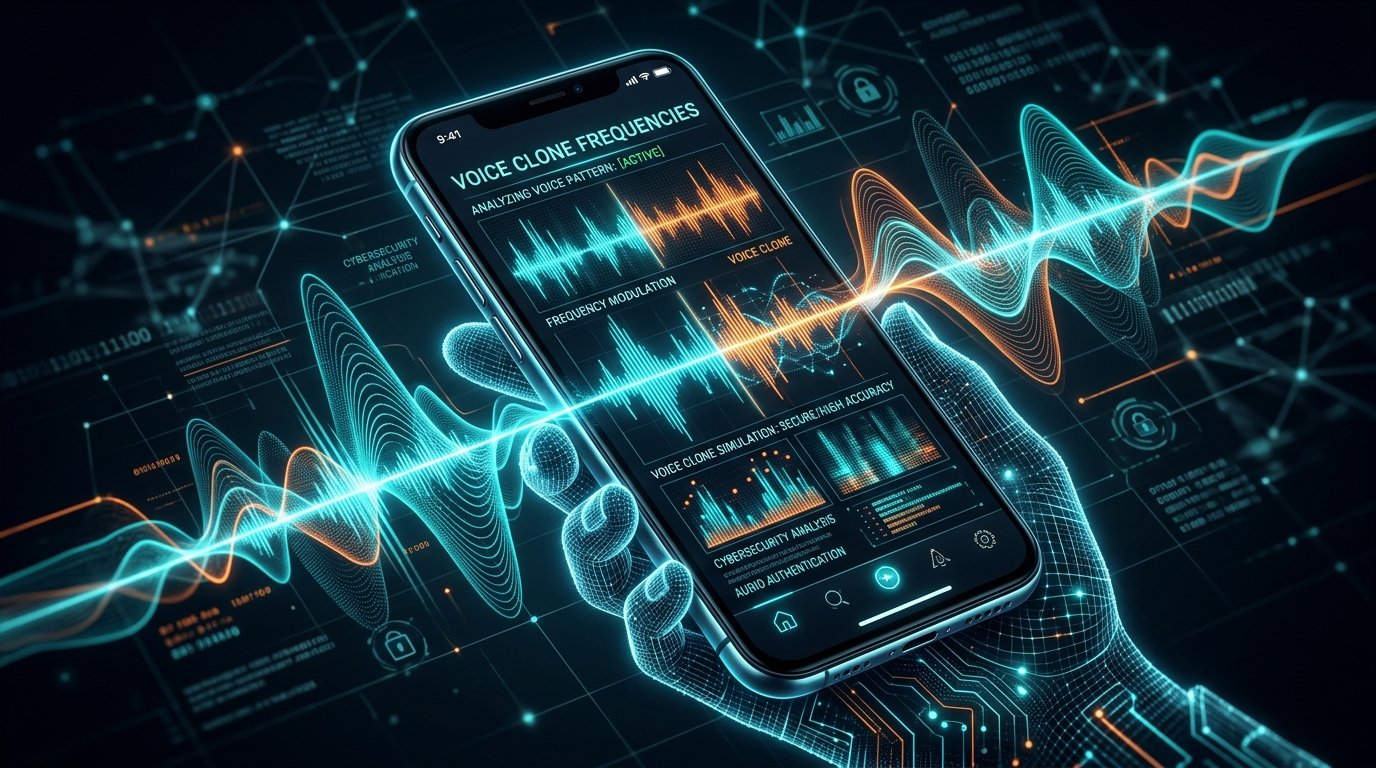
Table of Contents
The phone rings at 11 p.m. It's your daughter's voice — sobbing, breathless, saying she's been in an accident. A second voice cuts in, calmer, telling you she's fine for now but you need to send money before this "gets complicated." Every instinct you have says act. That instinct is exactly what the scam is built to exploit.
She never called. The voice was a clone, built from a few seconds of audio pulled off a public video she posted last month. This is the AI voice cloning scam, and in 2026 it's no longer a novelty — the FBI has directly attributed hundreds of millions of dollars in losses to AI-related fraud in the past year, and the bureau has issued repeated public warnings about voice-clone distress calls specifically targeting families.
I've spent years investigating fraud that hinges on faked identity — fake LinkedIn profiles, cloned company websites, spoofed phone numbers. Voice cloning is the same category of problem wearing a new mask. The identity marker people trust most — the actual sound of a loved one's voice — is now trivial to fake. The good news: the verification method doesn't change just because the fake got better. You just need to know where to apply it.
Why a Cloned Voice Fools Even Careful People
Voice cloning models don't need a studio recording. Researchers demonstrated years ago that a synthetic voice convincing enough to fool a listener can be built from as little as three seconds of clean audio — a birthday video, a voicemail greeting, a TikTok clip, a work presentation posted to YouTube. Modern tools go further, replicating not just pitch and tone but breathing patterns and speech cadence, which is exactly what used to give away a bad impersonation.
That closes off the defense people have relied on for decades: "I'd know if it wasn't really them." A scammer with ten minutes and a free tool doesn't need to nail a whole conversation. They only need a short, emotionally loaded phrase — "Mom, help me" — played over a bad connection, with a second person doing the actual talking once the panic sets in.
Where These Calls Are Showing Up in 2026
The family emergency version gets the most headlines, but the same technique now spans three distinct patterns.
The family emergency call. A grandparent or parent gets a call that sounds exactly like a grandchild or child in distress — arrested, in a crash, or supposedly kidnapped — with a demand for immediate payment, usually by wire, gift card, cryptocurrency, or cash handed to a courier. The FTC has directly warned that scammers are using AI to enhance this exact scheme.
Executive and wire-transfer fraud. A finance employee receives a call, or in more advanced cases a live video call, that appears to be their CEO or CFO authorizing an urgent transfer. The most widely reported example involved a Hong Kong finance worker who wired roughly $25 million after joining what looked like a routine video conference with deepfaked senior executives. Simpler, voice-only versions of this attack are far more common against smaller businesses and rarely make the news.
Government and authority impersonation. Cloned voices posing as law enforcement, immigration officials, or agency representatives pressure victims — often the same population targeted by classic phone scams — into paying "fines" or handing over personal information on the spot.
Pro Tip: Notice what all three patterns share: urgency, a request to act before you can verify, and a payment method that's hard to reverse. The voice is what's new. The pressure tactics are the same ones fraud investigators have flagged for years.
The Verification Protocol: How to Confirm a Voice Before You Act
None of this requires new technology on your end. It requires a habit, applied consistently, the same way an investigator treats any unverified claim of identity: confirm through a second, independent channel before you act on it.
Step 1: Hang Up — Every Time
This is the hardest step and the most important one. A caller who says "there's no time to verify" is telling you, directly, that verification is exactly what would expose them. A real emergency is still an emergency two minutes from now. Ending the call costs you nothing. Staying on it, while someone works you toward a payment, costs everything.
Step 2: Call Back on a Number You Already Have
Not a callback number the caller gives you. Not a number you find by searching. The number already saved in your phone, or one you look up independently through an official source. If the person is fine, this takes thirty seconds to confirm. If they don't answer, call a second family member or colleague who can verify their whereabouts.
Step 3: Set Up a Family Safe Word Before You Need It
This is the single highest-leverage defense against a voice clone, and it works precisely because it doesn't depend on spotting a fake — it depends on the scammer not having information they were never exposed to. Agree on a short, unusual word or phrase with close family members now, in a calm moment, not during a crisis call. Anyone claiming to be that person in an emergency should be able to produce it. A cloned voice can sound exactly right and still not know the word, because the clone only replicates sound — it has no access to information that was never spoken publicly.
Step 4: Ask a Private Question, Not a Public One
If there's no safe word in place yet, ask something a scammer couldn't answer from your own digital footprint. This is where an OSINT mindset actually helps you: think about what a stranger could learn about your family from public social media, tagged photos, or old blog posts, and avoid exactly those questions. "What's your dog's name?" fails if the dog has its own Instagram tag. A detail that was never posted anywhere works.
Step 5: Never Move Money on the First Call
Wire transfers, gift cards, cryptocurrency, and cash handed to a rideshare driver or courier are the common thread across nearly every reported case, precisely because none of them are reversible once they're gone. Treat any of these payment methods, combined with urgency, as the clearest signal in the entire call.
Step 6: Businesses Need Dual-Channel Authorization
For executive-fraud variants, the fix is procedural, not technical. No wire transfer or credential change gets authorized from a single call or a single approver, regardless of how convincing the voice or video is. Require confirmation through a second channel — a callback to a known number, a separate approval in writing — before funds move, and make that policy explicit enough that no employee feels pressured to skip it under time pressure.
Red Flags Beyond the Voice Itself
A handful of signals repeat across nearly every documented case, independent of how good the clone sounds:
- Urgency paired with a request to keep the situation secret from other family members or colleagues
- Instructions to stay on the phone while you withdraw cash, drive to a location, or complete a transfer
- A payment method that's hard or impossible to reverse — wire, crypto, gift card, or cash courier
- Refusal to let you hang up and call back, or escalating pressure the moment you suggest it
- A second "authority" voice — a lawyer, officer, or doctor — introduced to lock the story in place
Any one of these justifies ending the call. Two or more together is close to a guarantee.
Protecting Your Own Voice From Being Cloned
You can't fully prevent your voice from ever appearing online, but you can raise the cost of collecting it. Set social media accounts with video or voice content to private or friends-only rather than public. Think twice before posting long clips of yourself or family members speaking clearly on camera — the raw material scammers need is short and easy to miss. This is the same digital footprint discipline that matters in any OSINT-based fraud prevention: the less public audio and video tied to your name, the less a stranger has to work with.
What to Do If You've Already Sent Money
Speed matters more than anything else here. If you sent funds by wire, contact your bank immediately — some transfers can still be recalled within a narrow window. If you used a gift card, call the retailer's fraud line right away; some card balances can be frozen before they're redeemed.
Report the incident to the FTC at ReportFraud.ftc.gov and to the FBI's IC3.gov, and keep any call recordings, screenshots, or transaction confirmations as evidence. Don't let embarrassment slow down the report — the pattern only gets disrupted when these cases are documented.
Key Takeaways
AI voice cloning removes the one defense people have relied on for decades: recognizing that something "just doesn't sound right." The fix isn't learning to hear the fake — increasingly, you won't be able to. It's applying the same verification discipline an investigator uses for any unconfirmed identity claim: hang up, call back on a known number, confirm through a safe word or private information the scammer couldn't have, and never move money before that confirmation happens.
Frequently Asked Questions
What is an AI voice cloning scam?
An AI voice cloning scam uses artificial intelligence to recreate a real person's voice from a short audio sample, then uses that cloned voice in a phone call to convince a victim they're speaking with a family member, executive, or official — typically to pressure an urgent, irreversible payment.
How much audio does it take to clone a voice?
Voice cloning tools can produce a convincing synthetic voice from as little as three seconds of clean audio, according to research demonstrated by Microsoft. A single public video, voicemail greeting, or short clip posted to social media is enough raw material for a scammer to work with.
How can I tell if a call is a real family member or a voice clone?
Don't rely on how the voice sounds. Hang up and call the person back on a number you already have saved, not one the caller provides. Ask for a pre-agreed family safe word or a private detail that was never posted publicly — a clone can replicate sound but not information it was never exposed to.
Are AI voice cloning scams only targeting elderly people?
No. While grandparent-style family emergency scams frequently target older adults, the same technique is used in executive and wire-transfer fraud against businesses of any size, and in impersonation of government officials targeting adults across every age group.
What should I do if I already sent money to a voice cloning scammer?
Contact your bank or the gift card issuer immediately, since some transfers and balances can still be frozen or recalled in a narrow window. File a report at ReportFraud.ftc.gov and IC3.gov, and keep any recordings or transaction records as evidence for the investigation.
Passionate OSINT investigator and cybersecurity professional with over 3 years of experience. Expertise in web penetration testing, background checks, fraud detection, and uncovering digital fingerprints. Providing verified truth in the digital shadows.
Need a
ProfessionalInvestigation?
If this case sounds familiar, I can help. Get a confidential consultation today.